AI voice agents · Oklahoma

AI callbacks to web leads in Oklahoma: the rules to check.

Oklahoma's 2022 Telephone Solicitation Act requires prior express written consent for commercial sales calls that use an automated dialing system or a recorded message, bars calls before 8 a.m. or after 8 p.m. in the called person's time zone, and caps calls at three in 24 hours on one subject; two older Attorney General regimes add a no-sales-call registry and a registration-and-bond rule. Its roofing act bars a roofing contractor paid from an insurance claim from advertising or promising to pay an insured's deductible as an inducement. The texts we read do not say whether a callback to a web-form lead is covered (of the act's 26 exemption categories, the ones that matter for a callback are worded for face-to-face meetings, existing relationships, past purchases and one-off sales), whether a live AI voice is an “automated system” or a “recorded message”, or how an exemption that reads only “A commercial telephone seller” fits with the hours rule.

Fixed price · NDA before details · You own every account

StatusPublished November 20, 2026. Checked against the linked sources on November 15, 2026. Laws change. Not legal advice and not reviewed by counsel. We are a new studio and our voice agent is a demo build.

What do Oklahoma's telephone-sales laws add to the federal rules?

The national rules come first: see the federal baseline and how these guides are written. These are the points where Oklahoma differs or adds to it. Spot an error? Email us.

  • Written consent for automated dialing and recorded messages

    No one may make, or knowingly allow, a commercial telephonic sales call by an automated dialing system or a recorded message without the called party's prior express written consent. Consent is a signed agreement that names the number, clearly authorizes calls, texts or voicemails by an automated system or a recorded or prerecorded message, includes a clear and conspicuous disclosure that signing authorizes such calls, and says signing is not a condition of buying anything; an electronic signature counts to the extent valid under federal law or state contract law. The act defines only four terms, and the text never mentions AI, so whether a live AI voice is an “automated system” or a “recorded message” is not answered. The consent rule speaks of a “commercial telephonic sales call” and the hours rule of a “commercial telephone solicitation call”, and the act defines neither. The linked text is the 2022 enrolled bill; we checked for later amendments only through the absence of amendment notes in the legislature's current Title 15 file.15 O.S. §§ 775C.2(3), 775C.3(A) (HB 3168, 2022)

  • An 8 a.m. to 8 p.m. window and three calls in 24 hours

    A commercial telephone seller or salesperson may not make a commercial telephone solicitation call before 8 a.m. or after 8 p.m. in the called person's time zone, or more than three calls from any number to a person over 24 hours on the same subject matter or issue, regardless of the number used. The rule covers calls made through automated dialing or recorded messages too, and a call to any Oklahoma area code is presumed, rebuttably, to be to an Oklahoma resident or a person in the state. The text does not define “same subject matter or issue” or say whether calls by different sellers are added together. “Commercial telephone seller” is not defined in this act.15 O.S. §§ 775C.3(D), 775C.4(A)(1)-(2) (HB 3168, 2022)

  • Exemptions that matter for a callback, and one that is unclear

    The act exempts, among 26 categories, a call that only sets up a later face-to-face meeting (no major sales presentation on the call, no sale completed or provisionally accepted on it, and not where, directly after the call, the seller sends an individual whose primary purpose is to collect payment or deliver an item); a solicitor calling consumers with an existing business relationship with, or past purchases from, the same business enterprise; a call about maintenance or repair of goods previously bought from the caller; and an isolated transaction not part of a pattern. None of the categories we read names roofing, HVAC or solar. The four above are not worded for a call that answers an inquiry, and we did not record the conditions of every other category; other Oklahoma sections do use request and inquiry wording (§ 755.1(C)(3), § 775B.2(3)). “Existing business relationship” is not defined. Item 13 reads in full “A commercial telephone seller;”, while the hours rule regulates “a commercial telephone seller or salesperson”. We read no official interpretation of that, so we do not say which way it cuts; ask Oklahoma counsel.15 O.S. § 775C.5(1), (3), (12), (13), (20) (HB 3168, 2022)

  • Caller ID and an altered voice

    A person who makes or causes a commercial telephonic sales call must transmit the originating number and, if the carrier supplies it, the caller's name; the seller's name and a customer-service number answered during regular business hours may be substituted, and a displayed number must connect back to the caller or seller. A seller or salesperson may not intentionally block the name or number or use technology to display a different number to conceal the caller's identity. It is also unlawful to intentionally alter the caller's voice to disguise identity in order to defraud, confuse or injure the recipient or to obtain personal information for fraudulent or unlawful use. This is not an AI-disclosure rule, and the text does not say whether an AI voice counts as altering a voice.15 O.S. §§ 775C.3(B)-(C), 775C.4(B) (HB 3168, 2022)

  • Who can sue, and for how much

    An aggrieved called party (the regular user of the number) may sue to stop a violation and recover the greater of actual damages or $500, and the court may, in its discretion, raise the award to up to three times that for a willful or knowing violation. No Attorney General or other public-enforcement clause appears in the act's six sections. The text says “a violation” and does not say whether each call is a separate violation.15 O.S. § 775C.6(A)-(B) (HB 3168, 2022)

  • The Attorney General's no-sales-call registry

    A telemarketer may not make unsolicited telemarketing sales calls or texts to a consumer (a natural person resident in Oklahoma) more than 30 days after the number first appears on the Attorney General's registry, and calls tied to an established business relationship are not violations. That relationship is a prior relationship formed within the preceding 24 months, or an existing one formed by voluntary two-way communication on the basis of an inquiry, application, purchase or transaction, not terminated by either party. “Telemarketing” leaves out a call made solely to arrange a later face-to-face meeting. A willful violation breaches the Consumer Protection Act, and the Attorney General may instead assess an administrative fine where the telemarketer shows the violation occurred despite its training policies, under rules we did not read. This act sets no calling hours.15 O.S. §§ 775B.2(2), (3), (6), 775B.3, 775B.6

  • Attorney General registration and a $10,000 bond

    A commercial telephone seller must register with the Attorney General at least 10 days before doing business in Oklahoma and file a $10,000 bond; individual employees need not register, and registration lasts one year. A seller does business in the state if it solicits from a location in Oklahoma or people located in Oklahoma. The act's exclusions include a person who completes the sale only at a later face-to-face meeting (not one held solely to collect payment or deliver) and one who solicits only business purchasers who previously bought identical or similar goods or services from that enterprise. Listed unlawful practices include operating without registration and a three-business-day cancellation right that is not given; violations are Consumer Protection Act violations. The text does not say whether a callback to a consumer who submitted an inquiry is “unsolicited”.15 O.S. §§ 775A.2-775A.5

  • Older rules for devices with a prerecorded or synthesized voice

    A device that stores or generates numbers and conveys a prerecorded or synthesized voice message to offer goods or services for sale may be used only if it disconnects within 20 seconds of a hang-up, avoids calls terminating in Oklahoma before 9 a.m. or after 9 p.m., and the call fits a listed category, including calls made solely in response to calls from the person or to a person who made a written request to be called. A contract for consumer goods or services made from an unsolicited device call without a live operator, in violation of the act, is voidable by the consumer unless memorialized in a signed writing. Section 755.1 dates from 1991-92 and § 755.2 was amended in 2011, and whether a real-time AI agent “conveys a prerecorded or synthesized voice message” is not answered. Their 9 a.m. to 9 p.m. window differs from the 8 a.m. to 8 p.m. window above, and we read nothing reconciling them.15 O.S. §§ 752(12), 755.1(C)-(D), 755.2

  • Recording a call: one party's consent

    A person not acting under color of law may intercept a wire, oral or electronic communication without violating the Security of Communications Act if the person is a party to it or one party gave prior consent, unless the purpose is a criminal act. Willfully intercepting in violation of the act is a Class D1 felony with a fine of not less than $5,000, imprisonment, or both. We read only §§ 176.1 to 176.4, so we checked no civil remedy, and nothing we read addresses an AI vendor's recording or a call with a party in another state.13 O.S. §§ 176.3, 176.4(5)

  • AI or bot disclosure

    We did not find an Oklahoma statute that requires disclosing an AI, bot or synthetic voice on a business sales call. The legislature's Title 15 and Title 13 files contain no AI, chatbot, generative or deepfake provisions, and the only “synthesized voice” wording is in the device rules above, which are not a disclosure duty. One search showed chatbot and synthetic-media bills (HB 3544, SB 1521, HB 3299, SB 2085) that we did not show to be enacted, and we did not check other statute titles, so this does not prove there is none.15 O.S. § 752(12); 13 O.S. §§ 176.1-176.4
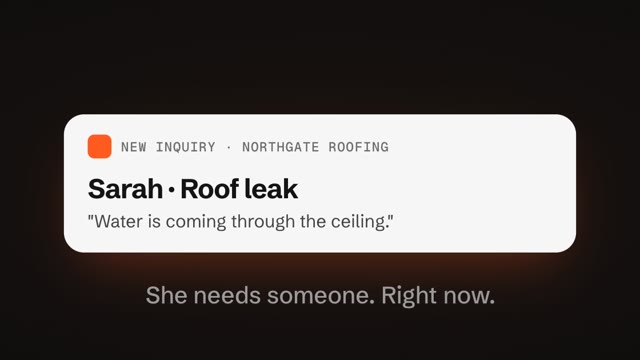
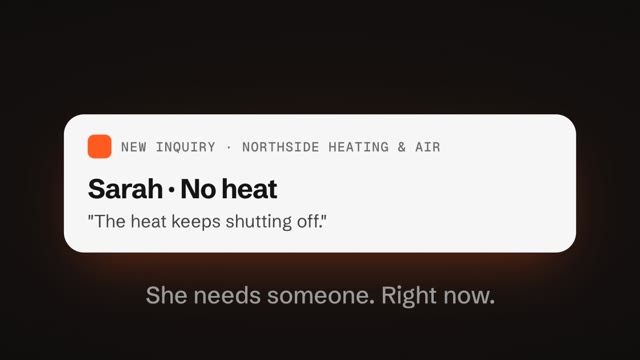
What should an Oklahoma contractor settle before an AI voice calls a lead back?

  1. Is the callback a “commercial telephonic sales call” at all, or does an exemption in § 775C.5 apply: a call that only sets up a later face-to-face meeting (item 3, with its conditions), an existing relationship with the same business enterprise (item 20, undefined) or past purchases (item 12)? Keep the call log, the exact script and what the person asked for.
  2. How do item 13 of the exemption list (“A commercial telephone seller;”) and the hours rule for “a commercial telephone seller or salesperson” fit together? The text does not say, so ask Oklahoma counsel before relying on either reading.
  3. Is an AI voice an “automated dialing system” or “recorded message” (§ 775C.3(A))? The text does not say. If it is, is there a signed written agreement that names the number, authorizes calls, texts or voicemails by an automated system or recorded message, and says signing is not a condition of buying?
  4. Are calls kept between 8 a.m. and 8 p.m. in the called person's time zone, and to no more than three on one subject in 24 hours from any number (§ 775C.4(A)), with every attempt counted until counsel says which count?
  5. Does caller ID show the originating number and name, or the seller's name and a customer-service number answered during business hours, and does a displayed number connect back (§ 775C.3(B))?
  6. If the call may be a device call with a “prerecorded or synthesized voice” (§ 755.1), does it stay inside 9 a.m. to 9 p.m., disconnect within 20 seconds of a hang-up and fit a listed category? The text does not say whether a live AI agent is such a device.
  7. Is the company registered with the Attorney General under § 775A or excluded by § 775A.2, and is each number checked against the Attorney General's registry under § 775B before a call (a relationship formed within the preceding 24 months counts, and so does an existing one formed on an inquiry, application or purchase and not terminated)?
  8. For roofing: is the contractor registered with the Construction Industries Board, does the script avoid advertising or promising to pay a deductible on an insured repair, and does the initial estimate carry the required written notice (§§ 1151.3, 1151.30)? From January 1, 2027, is a residential roofing endorsement in place or in time (§ 1151.25a)?

These are questions for your counsel and your form, not answers.

Which Oklahoma licensing rules touch roofing and HVAC offers?

Licensing is a separate question from calling rules. These are the rules we read that touch what is said in an offer, a bid or an advertisement. We read the roofing and mechanical acts in the Construction Industries Board's own PDFs, not the legislature's file (that download was cut off), and we did not confirm those PDFs are current. We read no Oklahoma rule on solar installation, so this page says nothing about it.

  • Roofing: registration, including offers by advertisement

    A roofing contractor must be registered annually with the Construction Industries Board. No one may act as one, or offer roofing work “by advertisement or otherwise”, without valid registration in good standing when soliciting a project. “Roofing contractor” includes a person who solicits roofing installation-related services, and “advertise” includes electronic solicitations, though it does not expressly name outbound phone calls. The registration number must appear on signs, cards, correspondence and contracts used to solicit. A violation is a misdemeanor with a fine of up to $500 per violation.59 O.S. §§ 1151.2(1), (18), 1151.3, 1151.7, 1151.17(C)

  • Roofing: no deductible inducements on insured repairs

    Where repairs are to be paid by an insured from the proceeds of a property or casualty policy, a roofing contractor may not, as an inducement, advertise or promise to pay all or part of the insured's deductible or offer to compensate the insured for any service. If the section is violated, the insurer is not obligated to consider the contractor's estimate. Every roofing contractor must give written notice of these requirements with its initial estimate. The section does not say “storm”; it covers any insurance-paid roofing work.59 O.S. § 1151.30(A)-(D)

  • Roofing: a residential endorsement from 2027

    From January 1, 2027, and except as otherwise provided in the act, a roofing contractor offering or doing residential roofing work needs a residential roofing endorsement. Contractors registered and in good standing by then have until January 1, 2028 to pass the exam or complete 10 hours of continuing education, and one holding a current commercial roofer endorsement on that date is exempt from the exam and extra continuing education. Labor-only contractors working directly for an endorsed registered contractor and providing no materials are excluded. A new applicant not registered and in good standing by January 1, 2027 may not “sell, offer, bid, inspect, or perform” residential roofing work until an endorsement is issued.59 O.S. § 1151.25a(A), (E)-(G)

  • HVAC: a Construction Industries Board license

    No one may engage or offer to engage in mechanical work, “by advertisement or otherwise”, as a journeyman or contractor without a valid Construction Industries Board license, and a firm must have a contractor responsible for all its mechanical work. Mechanical work is the installation, maintenance, repair or renovation of heating, exhaust, cooling, mechanical refrigeration or ventilation systems, other than minor repairs. The exemptions include a property owner doing minor repair and portable self-contained ductless units. A violation is a misdemeanor with a fine of $200 to $1,000, and the Mechanical Hearing Board may impose an administrative fine of up to $500 per violation, capped at $1,000.59 O.S. §§ 1850.2(10), 1850.7, 1850.10-1850.11

Which clock applies to a call to an Oklahoma number?

A form can be sent at any hour, so a callback system needs to know where the person is, and what time it is there, to apply any calling window. The location facts matter for that.

  • The called person's time zone, and a presumption about area codes

    The 2022 act's 8 a.m. to 8 p.m. window uses “the called person's time zone”, not Oklahoma's, and it presumes, rebuttably, that a call to any Oklahoma area code is to an Oklahoma resident or a person in the state. The older device rules apply their 9 a.m. to 9 p.m. window to “calls terminating in this state”. The text does not say how a caller finds the person's zone, and we did not read a time-zone statute, so we say nothing about the zones themselves.15 O.S. §§ 775C.3(D), 775C.4(A), 755.1(C)

  • An hour narrower than the federal window

    The federal rule bars telephone solicitations to a residential subscriber before 8 a.m. or after 9 p.m. at the called party's location. The 2022 act ends its window at 8 p.m. in the called person's time zone, an hour earlier, so a call inside the federal window can still fall outside the Oklahoma one. Which of the two applies to a given callback depends on whether each rule reaches it, and the federal exclusions (a prior express invitation or permission, an established business relationship) are worded differently from Oklahoma's.47 CFR § 64.1200(c)(1), (f)(15); 15 O.S. § 775C.4(A)(1)

What can we do for an Oklahoma company today?

Our one built agent is a demo for a fictional roofing company: a web form triggers a call that books an inspection (see the roofing page). HVAC and solar versions would be adapted with you and have not been built. We are a new studio with no clients yet.

FAQ

Questions about AI callbacks in Oklahoma

Something else on your mind? Email us

What hours can an AI agent call in Oklahoma?

The 2022 act bars commercial telephone solicitation calls before 8 a.m. or after 8 p.m. in the called person's time zone, and more than three to one person in 24 hours on the same subject. The older device statute uses 9 a.m. to 9 p.m. for prerecorded or synthesized voice calls, and we read nothing reconciling the two windows. Exemptions apply, and one reads only “A commercial telephone seller”, which we do not interpret.

Does Oklahoma's written-consent rule apply to a callback to someone who filled in a web form?

The act requires prior express written consent for a commercial sales call by an automated dialing system or a recorded message. Of its 26 exemption categories, the ones that matter for a callback are worded for face-to-face meetings, existing relationships, past purchases and one-off sales, and none of those is worded for a call that answers an inquiry (other Oklahoma sections do use request and inquiry wording). The text does not say whether a web-form submission is consent, or whether a live AI voice is an automated system or a recorded message; ask counsel.

Can an AI voice agent record the call in Oklahoma?

A person who is a party to a call may intercept it, or one party's prior consent is enough, under the Security of Communications Act paragraph we read; willfully intercepting without that is a Class D1 felony. We read only sections 176.1 to 176.4, so we checked no civil remedy, and nothing we read says whether an AI vendor's recording counts or how a call with a party in another state is treated.

Can an Oklahoma roofing callback offer to cover the insurance deductible?

Where repairs are paid from an insurance claim, a roofing contractor may not, as an inducement, advertise or promise to pay all or part of the deductible or offer to compensate the insured, and the insurer need not consider the contractor's estimate if it does. Roofing contractors must also be registered, and the definition includes a person who solicits roofing installation-related services. Ask Oklahoma counsel how this applies to a call script.

Contact

Tell us what's slipping.

Book a 15-minute call, or email us the business and the problem. We reply within one business day with whether we can help and a fixed quote for a first build.