Why can HVAC inquiries get missed?
On the first hot weekend or the first cold snap, the inbox and the voicemail can fill up at the same moment your techs are in attics and basements.
Many buyers contact more than one company, so a fast first call may help. We have no client data yet. The agent is meant to cover the gap between "inquiry received" and "someone called", and your office keeps the conversations that need a person.
What does the agent do with an HVAC inquiry?
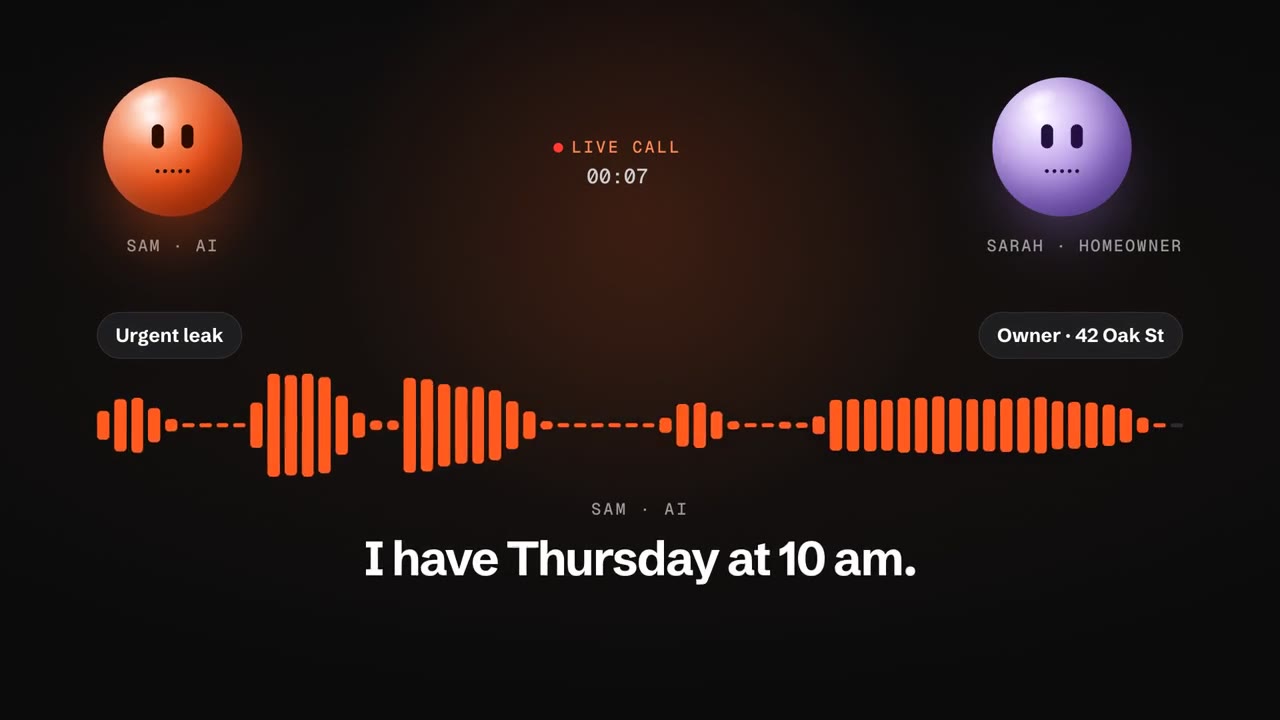
- Is set up to call back a new web inquiry when it arrives. The demo covers a web form only; missed calls can be scoped on a call.
- Introduces itself as your company's assistant. By default it says it is an AI if asked; we recommend saying so in the opening line too.
- Is designed to sort the job by rules we agree with you. A no-heat or no-cooling problem would be treated as urgent and offered the earliest open slot. A tune-up, a quote or a maintenance plan question would get a routine slot. We would test this with fictional no-heat calls before go-live.
- Is set up to ask what a dispatcher needs: the address, which system it is (furnace, heat pump, air conditioner, boiler), what it is doing, for how long, and whether the caller owns or rents.
- Offers a time and confirms it out loud. Writing to your calendar, CRM or dispatch tool is set up per client, and we tell you on the first call whether yours can be connected.
What counts as urgent is your call. We agree it with you, for example no heat in cold weather, and set it as a rule.
What would the agent be told not to do?
These are instructions, not guarantees. We would test them with fictional calls, including callers who push for advice, and show you the recordings before go-live. AI can still make mistakes, so we recommend your team reviews early calls.
- Treat a gas smell or a carbon monoxide alarm as a booking. These are the highest-risk calls. Our plan is for the agent to tell the caller to leave the home and call 911 or the gas company, then alert your on-call person. We have not built or tested this for an HVAC company yet. Keep your existing emergency line in place.
- Diagnose equipment or tell callers to repair it themselves. It collects the symptoms for your tech.
- Quote prices. Your tech or office gives the quote.
- Call people who have not asked. It is designed to call only someone who has just sent an inquiry with a phone number. Whether your form wording gives legal consent for an automated or AI-voice call is for your counsel to confirm, and we do not switch calls on until you confirm. We do not build agents that cold-call purchased lists.
Alerts: we set up alerts for failures the system can detect, such as a failed call or booking, and test them before go-live.
Is it right for your HVAC company?
A good fit
- Inquiries arrive by web form or ads
- Techs are in the field and nobody watches the inbox all day
- You already use a scheduling or dispatch tool, or at least a shared calendar
Probably not yet
- You mainly want every incoming call answered live. The demo build calls people back; inbound answering is a separate build that we scope on a call
- You want it to handle emergencies on its own
- You want it to call lists of people who never asked
Same approach for other trades: roofing companies and solar companies.